Kronikë në Kosovë – Kosovo Chronicles
Going back to my Balkan roots to give back is a personal reason why I embarked on a career in international affairs originally. Getting to do so this summer through UN Women is nearly a dream. Touchdown in the capital of Kosovo feels familiar yet new, comfortingly reminiscent of my country Albania and childhood there, but this time a vastly different version, mission, and experience.
Pristina has the air of a serene and young city – due to its large youth population of university students, children, new infrastructure and architecture, and fast pace of growth and development. At only about 205,000 registered inhabitants, the city is relatively small, quiet, and peaceful. In public areas, families and groups of friends enjoy strolling and chatting in the Prishtina City Park or Nënë Tereza Boulevard. Beautiful monuments like the national library, major churches and mosques, statues of national heroes, the “Newborn” sign make for intriguing attractions. The city’s enormous churches ring their bells, while the numerous mosques sound their call to prayers.
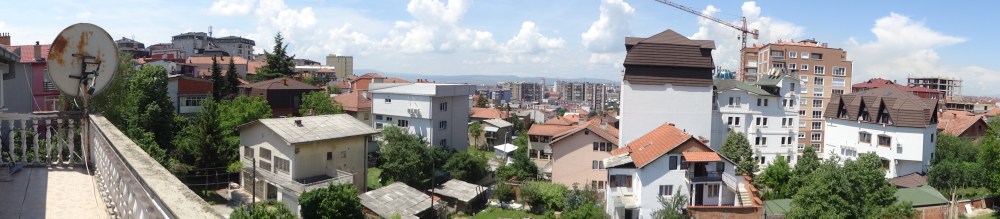
The buildings near the city center and Dardan neighborhoods are quite new. While in the neighborhoods, families living with grandparents gather on afternoons in backyards, with the traditional Kosovar-Albanian music drumming in the background. Small shops and businesses like grocery stores, dry cleaners, bookstores, bread stores, etc. conveniently line many neighborhood streets so that obtaining services or products is simple and quick. On the streets, I find ice cream, and traditional Kosovo/ Albanian food being sold throughout, including my favorite, byrek and petulla.
The people are warm and welcoming, eager to assist with answering questions, offering ideas, and explaining directions (or even leading you to where you need to be). They are the best knowledge keepers and teachers of the city and country- be it the local shopkeeper, the realtor, or the passerby offering directions. Highly adept at foreign languages, especially English, Kosovars in Pristina are used to foreigners. They especially express a sentiment of brotherhood towards their Albanian neighbors. Nearly everyone seems to have the latest smartphones. With generational shifts, the young people sport the latest skinny jeans and fashions, speak languages fluently, and even experience some European travel.


Major international organizations, NGOs, and multinational companies operate in the country: the United Nations team, American USAID, German GIZ, foreign banks, and more.
As an Albanian-American at UN Women, I am now in a curious in-between state: technically a foreigner, but closer to the Kosovars than Western Europeans or other Americans. This puts me in a unique position of trust and understanding in my summer host country. Yet my accent gives me away, though I have long accepted that every language I speak is perennially with an accent. While making efforts to learn, I admit being ashamed from having difficulty understanding the northern Albanian dialect here.
Yet already major challenges are visible in Pristina. Inconsistency in infrastructure renders main roads paved while back roads, more rudimentary. Likewise in neighborhoods such as Aktash, new concrete freshly painted buildings and the 5 star hotel AFA loom alongside unfinished empty buildings (after owners run out of money, or their building is suspended for illegal construction). A zoning architectural plan and code appear elusive. Sidewalks turn into unofficial parking lots, while people cross roads at their own risk.
On the other hand, a large part of the infrastructure (highway network, the new airport, buildings) are quite developed and financed by foreign aid agencies and donors, which make their work known through billboard-like signs. In fact, Kosovo is now well-connected by highway systems with its neighbors like Albania, Macedonia, Montenegro, and Serbia (although the latter places prohibitive border restrictions for travelers from Kosovo).


Environmentally, waste disposal is problematic, recycling seemingly non-existent for the most part. Gorgeous roses and honeysuckles aromas from house backyards blend with visibly grey car emissions.
Further worrisome is the state of the economy. Pristina imports nearly all foodstuff and supermarket goods, producing and exporting very little. Trying to navigate the array of products from Germany, Switzerland, Serbia, and many more countries (without English or Albanian translations sometimes) while selecting organic and locally produced food is a disorienting feat. Indeed organic production of food in Kosovo and Albania is an issue, for farmers have taken to utilizing chemicals for convenience and increased production. The locally grown food that I appreciate most are honey, feta cheese, “mountain tea” and olive oil.
The people note dissatisfaction with the state of politics, corruption, unemployment, and more. Since its independence from Serbia in 2008, Kosovo has been making strides of progress in development and improved governance, largely with the help of international assistance. Massive work remains, albeit with fast development at every turn. I look forward to getting to know this intriguing city in the coming months, and to even doing some short trips to other parts of Kosovo and the region!

 K-squared