Millennials, known as Generation Y, are those born in the 1980s and 1990s, today students and young professionals. While the term is often used for young people in the US and sometimes Europe, it may be applied to citizens from different parts of the world. This generation to which most of my colleagues, classmates, friends, and I belong, shares a different upbringing from that of our predecessors due to the rapid changes in technology, media, and globalization. This makes it somewhat of an “enigma” for social scientists. Meanwhile, employers stereotype the generation as “lazy,” “egotistical,” and “underprepared” as they fervently attempt to figure out how to motivate these newcomers in the workforce.
Yet, this generation is also tasked with the colossal task of fixing the massive issues created previously – ongoing conflicts and wars, social security insolvency, an underway environmental disaster, economic crisis, intensifying income inequality, and rigidification of social mobility.
Even with greater technology, much higher work output and efficiency is required of young workers. Meanwhile, skyrocketing college tuition is crippling young people from the beginning, as they start working already with thousands of dollars of debt. This causes many young people today to struggle in building a career, as well as to delay or altogether avoid marriage, children, and purchasing a house. Whereas before it was possible to support a family with a job obtained with a high school diploma, today not even graduate degrees may be enough.

Millennials face the highest competition for university and workforce entrance. In fact, with a slowing economy, youth are now being used for low-cost or free labor, such as in unpaid internships. Organizations benefit from youth’s energy and professional work (often full-time) due to an extremely competitive applicant pool. Youth unemployment, underemployment and underpayment are at their highest in the US and Europe.
Meanwhile, youth around the world have less say in their governments and conflict reconciliation efforts– even while they have have most at stake. The millennials comprise a generation thrown into prior messes created, high debt, disenfranchisement, and struggle for work. But they also have the most groundbreaking and incredible potential to best tackle contemporary issues.
There is an almost clean break in abilities, mentalities, experiences of those under 35 and those above, in both the US and Europe. Nearly all young people who I have met around the world speak several languages fluently or well, while the older generations in their respective communities struggle in English. The same goes for use of technology, flexibility, wide skill set, and versatility in jobs – all areas where young people exceed.
Most importantly, this is a generation that is more traveled, interconnected, and novel than ever before – that is more open to new experiences, and people different than them. Young people now are using creativity and innovation to solve problems, as we realize that business-as-usual solutions will not suffice. Youth are critical in precipitating massive changes in culture and politics, often through connection and media. This is how the Arab Spring began, for instance, fueled and sustained by the youth. The transition from former Communist Eastern-European countries to democracies is possible only with the new generations. While there is also a rise of a backlash from extremist parties, reproduced by a minority of young people, in global cities and beyond the overall trend is youth that champion human rights, tolerance of diversity, and environmental protection.
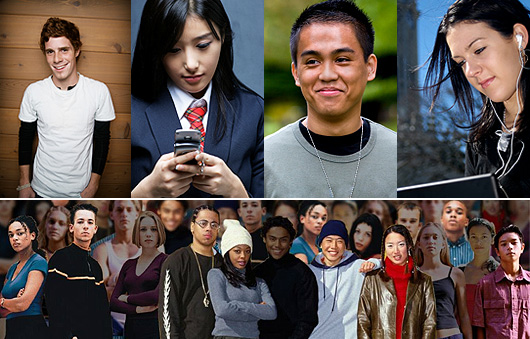
Millennials can better be generalized as a generation that more than ever before thinks critically, is unafraid to challenge the status-quo, and has the ability to function at a never-before seen rate of multitasking. In the workforce, these youth defy business-as-usual by preferring to work under their own rules, use freedom and flexibility for innovation, take risks for the greatest gains, prioritize social good values, and refuse to sacrifice human rights and environmental ideals.
The number of startups or civil society organizations led by youth engagement has never been greater, as show the Youth Assembly at the UN, or the Youth Development Program in the NGO Montage Initiative. Youth are becoming a large priority on the global scale, as the UN Secretary-General appointed for the first time the Special Envoy for Youth.
Standing on the shoulders of those before us, millennials prove to be key to changing mentalities with their energy, open-mindedness, and originality. As the reins of power (as well as an ambitious agenda of problems to fix) now pass from the older generations, young people today are apt, armed, and in a position to tackle today’s challenges in unconventional ways to make an impact and legacy like never before.

 K-squared