The American workforce and education system stress the significance of teamwork – in the classroom, in the sports arena, and in the office. Yet, excellent team dynamics do not just appear. So what makes a good team? Having worked very closely in large teams under intense circumstances in different countries, I can share some thoughts.
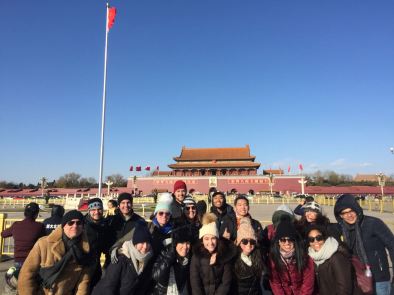
It is no overstatement to say that our team in China was exceptional. I always said that the classes I taught in Beijing were never mine. Rather my classes belonged to the students and were a culmination of the efforts of my colleagues, the Assistant Teachers and colleague Master Teachers. I took inspiration and recommendations from fellow Master Teachers. Already on the first day, I noticed major improvement in my students’ speaking abilities from morning until afternoon- thanks to the Assistant Teachers who worked with them tirelessly in between. The confidence that our students felt, their improvement, how they were touched by this program and the cultural exchange beyond academics was a result of our entire team.
Another excellent team experience includes my consulting group project in Indonesia – 5 of us boarded propeller planes to island hop so to assess a nation-wide education program – all in 100-degree weather, sometimes working 14-hour days with a total of 150 stakeholders or so. Our team chemistry and synergy were a deciding factor in producing our best work and constructive input to our client organization for how it could strengthen its nation-wide education program.
Also memorably, my team experience in India with Montage Initiative featured some of my closest friends in a team of 15 on an adventure through Delhi, Vrindavan, and other cities in northern India to engage in human rights.
A top team stands out and shines in the most difficult of circumstances – whether in a foreign country, under time pressure, long work hours, or other challenging situations. So what are the ingredients for a strong team that survives and thrives? Why are they hard to achieve at times? I credit my best team experiences to:
1. Mission and goal – Everyone has the same mission and goal. While people choose different reasons for engaging in the program or work, they have the same end goal in mind. In China, our goal was to improve the English and cultural understanding of the USA for Chinese students. In Indonesia, it was to provide insights and guidance into how to optimize a particular development program. The mission and goal must be communicated by the team leaders and everyone must be on the same page, thus taking ownership of their job.
2. Same values – Similarly to mission, certain fundamental values must be shared by everyone in the team. In China, we all shared a love for teaching, foreign languages, travel, making a difference, and commitment to high quality work.
3. Put the ego away and cut the drama – this is where team dynamics can derail fast. Too often people put selfish intentions beyond everyone else, protest ideas that challenge them, take constructive critique negatively, or feel offended if they are not constantly the star. On a more personal level, some may gossip, overreact, or skew dynamics between individuals (ie. rivalries, grudges, romantic feelings, general drama etc.). These elements were absent in my best team experiences, as everyone needs to be professional and guided by a greater purpose. We each recognized that the team was infinitely stronger with everyone in it. Any one of us alone could not have accomplished what we did for our 260 Chinese students.


4. Playing on strengths – When called upon, every team member steps up to lead the component where she or he has strengths and advantages. This is especially important in situations of improvisation at work. An environmental expert on my team lead activities on environmental sustainability, the dancers among us taught dance lesson in my class, our Chinese-speaking team member provided simultaneous interpretation whenever needed, and much more. A team leader and team members must know how and when to maximize the strengths of each member.
5. Care for one another – the Jesuit value of cura personalis that I learned at Fairfield University signifies “care for the whole person.” It means seeing each team member as a whole person, rather than fragmenting them into one or two narrow roles and identities. One is not simply a project manager, supervisor, or teacher. Rather one is also a daughter, friend, volunteer, soccer player, oldest sibling, etc with many facets to who we are. At the end of the day, our human interactions go beyond narrowly and artificially delineated roles in the workplace or classroom. Recognizing this helps us to see that every team member is an individual with his or her own stories, potential for contribution, and sometimes need for help, should it arise.
6. Inclusive definition of team – members of a team include not just team leaders and colleagues, but everyone supporting them who is a key part of the project/ program in some way or another. The executive director of the Rassias Center said that we had a team of almost 300 people – meaning our Dartmouth College staff, Chinese staff, and our 250+ students!
7. Humor – finally, don’t forget to have a good time and laugh through the hard stuff!

The chemistry and human interaction forces that lead to dynamism and synergy are hard to pinpoint, and it will be harder to recreate an experience such as ours in China. I saw the forces above in action in the best ways recently, in arguably my most epic team experience yet. On that note, I thank my team colleagues for being an inspiration and showing what it means to be a leader, each in their own way.

 K-squared