When innocent lives pay the price for absurdity of disturbed individuals under twisted ideology (in the name of religion, race, sexual orientation, etc), all of humanity loses – whether it be attacks in Orlando, Dallas, Paris, Nice, Brussels, Turkey, throughout the Middle East and sadly much more. Technology and social media platforms are being effectively manipulated to radicalize and target civilians with the rapidity of wildfire like never before. Meanwhile countries, their law enforcement, and intelligence agencies are struggling to keep up with the security threats and civilian tolls.
With so many horrific attacks by radicalized individuals, a friend asked me what we can each do to make a difference and to tackle this problem – those of us regular folks in the USA or European countries, who are not involved in the military, government or intelligence agencies. This blog entry is an attempt to answer her question and get the conversation started in the West, as we are tired of feeling powerless in the face of hearing such tragic news every week.
One does not need to consider a career shift into security altogether to counter extremist action. If you are very much compelled to do so, it is always an option. However, it is possible to a difference from any location and any type of work.
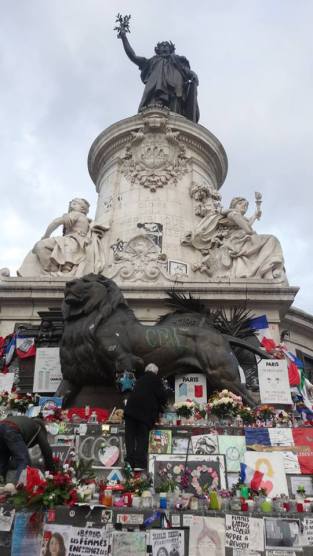
The problem with the attacks today is that they are new, and so traditional military intervention are not adapting fast enough to cope with them. These multifaceted problems cannot be tackled from any one angle, but they require action from all sides and disciplines beyond security. More than anything they are an issue of failure in social integration, such as through employment (or lack thereof) in education systems, and youth alienation.
As pointed out by commentator, Jan Malekzade, many refugees flee from traumatic experiences, sometimes having witnessed and experienced grave violence, such as war. Others come from backgrounds of poverty as economic refugees. Coming from such physically and psychologically fragile contexts, people may lose themselves and radicalize when they fail to integrate socially into their new society. It is also important to remember that the majority of terrorist acts occur in conflict states to begin with.
While many immigrants to North America or Europe initially struggle (economically, linguistically, socially, etc), they eventually take roots and contribute much to their new home, as my hometown Connecticut slogan says “He who transplants succeeds.” Yet a tiny minority may break under the pressure and shock of a new culture, and their own inability to comprehend, adapt, and contribute actively to their new community. Therefore, those in Western states have a role in helping newcomers feel that they belong to their community such as by:
- Volunteering with young people or others from marginalized groups (like as immigrants or racial minorities) in schools or non-profit organization that work with refugees.
- Simply reaching out to a new neighbor: My family members and I can share how much the support of our neighbors meant to us on a personal level when we initially moved to the USA in 2001. New American friends worked to help us find access to services, such as schools or medical facilities, and become acquainted and comfortable in our new community. This made major impact for my family and me, for which we are extremely grateful.
- Something that we can all do is to start a conversation with the people in our community (family, friends, colleagues, neighbors, etc.) and by writing about it.
- You may look to see if major organizations such as the UN, think tanks are located and have relevant initiatives in your area.
- In the private sector, one may work for the Corporate Social Responsibility department in a company on projects for education, gender equality, etc.
- Likewise, universities are quite involved with international relations if one would consider working as staff in one of the “global studies” departments there part time.
However, it is imperative to resist the rising extremist rhetoric of hate and stereotyping towards any group as a reaction to the world events. Paranoia, polarization, finger-pointing and hate further alienate people – and this is the goal of terrorists to tear apart societies in that way. One must not succumb to a mindset of fear and exclusion.
This type of polarized fearful thinking is what led to Brexit – during the moment where European and the US need to stick together the most, Europe is deliberately breaking apart. This event now undermines the pillars of collaboration, democracy, and free movement upon which Europe was founded, and through which it transformed from a conflict of war to one of peace (for which it rightly merited the Nobel Peace Prize in 2012).
Tolerance of diversity (ethnicity, religious, etc.) is key to social cohesion, especially as migration increases and more people travel and exchange experiences. Keeping that in mind, respect for universal human rights is also essential (such non-discrimination and as gender equality). We have to embody these ideal in our daily life and all the work that we do, in all the conversations that we hold with people – lead by example.
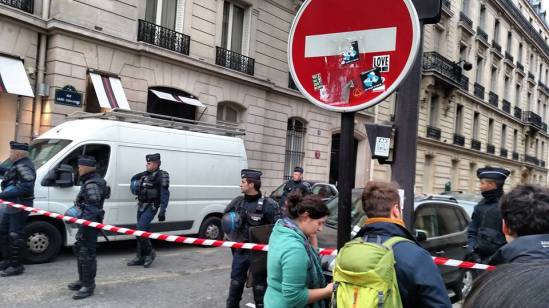
Some I know have voiced an interest in beginning work in the military to protect ideals of freedom and counter extremism. That is another possibility, again only one angle of how to approach the situation. Most of the security problem though seems to come, not from hard power though (US and France have exceptionally well-trained armies). But the security perspective problem seems to be more of a lack of intelligence, sharing of information, and coordination between intelligence agencies (CIA, INTERPOL, French guard, etc.). On the other hand, security work with an intelligence agency and technology is quite specialized.
Finally, a more direct but difficult idea is to move to work “in the field” – move directly in countries like France to work with refugees or homeless shelters on integrating newcomers and people in difficult economic situations. Having been inspired by several colleagues who do this work, I can share that it is a lot to take on in terms of logistical arrangement, and requires some language and other skills. One easy opportunity to do this is to teach English in French schools, there’s quite a bit of demand for this.
* * *
These are some broad ideas from many ways to approach the issue. Protecting human rights, supporting those around us, and preventing extremist violence is the work of everyone, from all backgrounds and agendas. It is a massive challenge when confronted with a clash of ideas, mindsets, problems, and basic survival. Even with the strongest military interventions, even under a state of emergency, these events continue to occur, like in France. At the micro individual level, we may feel powerless, but small steps that we can take, such as encouraging better integration of newcomers to our communities can help. In any case, what you are doing – thinking and reading about it, starting a conversation, reaching out, and considering different strategies is the right track.

 K-squared
Just do not loose sight of the fact that radicalism is not necessarily linked to migration: the Taliban in Afghanistan, Al Quaeda, DAISH in Syria have also indigenous roots. Radicalization is very strongly linked to conflict and the destruction of the social cohesion it brings with itself. Many of the attackers and terrorists with immigration background come from societies that have been destroyed by conflict.
Working many years wit refugees and populations affected by conflict and war, i observed that the psychological and mental injuries are as grave and sometimes even more grave than the physical injuries many civilians suffer in conflict. But these injuries are not always visible and if not addressed through professional care can lead to unpredictable outbreaks, like the young Afghan who randomly attacked people in a train.
Many countries have practically no psychological support and care in place for refugees and asylum seekers. This can have very negative repercussions!
LikeLike
Thank you very much for your excellent contribution Jan! I very much appreciate this point that is often neglected in public discourse today. The violent and traumatic experiences of those living in conflict-ridden states, as well as of migrants, is a root cause of the radicalization. Poverty and lack of prospects is also crucial as well, as many rightly say that poverty breeds terrorism. My entry is a bit narrow, mainly written for an audience in Western states and what people in North American or Europe can do to thwart radicalism on their end. While examining the root causes of terrorism would require a lengthier analysis and is a beyond the scope of this entry, I have made some appropriate changes and tried to include your point as well. Thanks again!
LikeLike